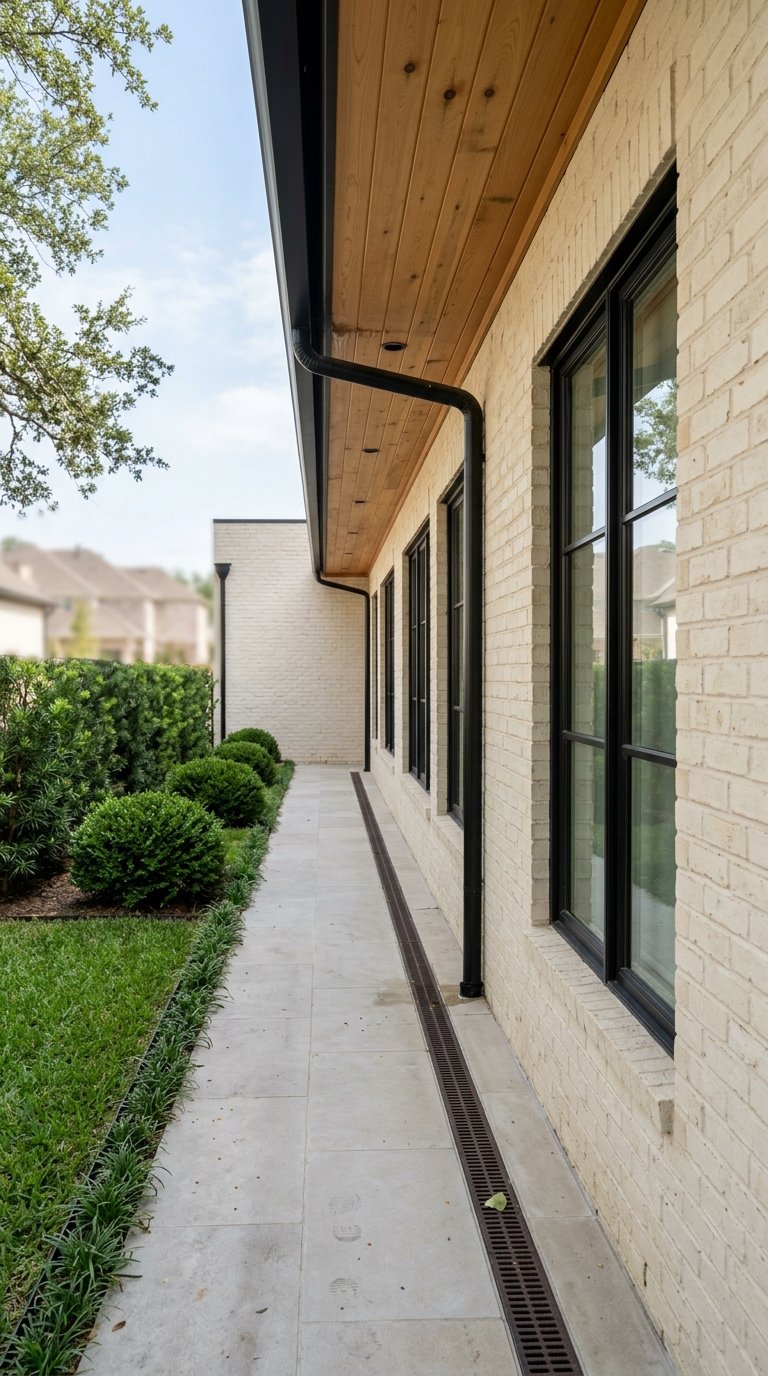
Buying New Construction And Infill Lots In Bellaire
April 23, 2026
April 23, 2026
Thinking about buying a teardown, an infill lot, or a brand-new home in Bellaire? It can be an exciting path, but it also comes with more moving parts than a typical resale purchase. If you want to understand how Bellaire lots work, what due diligence matters most, and how to compare lot-plus-build against renovated resale options, this guide will help you make a clearer decision. Let’s dive in.
Bellaire is a zoned city, and the city makes it clear that it does not enforce deed restrictions. That means you need to evaluate three things separately: zoning, recorded deed restrictions, and the plat. According to the City of Bellaire FAQ, builders are also responsible for checking deed restrictions, which is one reason early diligence matters.
This is especially important when you are looking at older homes being sold for lot value. A parcel may look straightforward at first glance, but setbacks, lot width, depth, and corner positioning can affect what you can actually build. In Bellaire, lot research is not just a box to check. It is the foundation of the whole decision.
Bellaire’s published setback sheet shows that residential standards vary by district. In R-1, the minimum lot area is 14,000 square feet, with 80 feet minimum width, 125 feet minimum depth, and a 50-foot front setback. In R-3, the minimum lot area is 7,400 square feet with a 30-foot front setback.
R-4 and R-5 allow 5,000-square-foot lots and a 25-foot front setback. These districts are capped at 2.5 stories, and minimum floor area requirements also vary by district. Side-yard setbacks can change based on lot width, so a narrow lot or corner lot may function very differently from a standard interior parcel.
If you are comparing multiple lots, these details can quickly change your options for garage placement, backyard depth, and overall home footprint. A lot that seems less expensive upfront may not produce the layout you want. That is why lot selection in Bellaire should start with buildability, not just price per square foot.
If you plan to combine two lots, Bellaire requires an amended plat. The city also notes that a replat cannot amend or remove existing deed restrictions, and buyers who need the actual deed restrictions are directed to the Harris County Clerk using the legal description from HCAD, as explained in the city FAQ.
For buyers, that means lot assembly is possible, but it is not automatic or purely cosmetic. You need to confirm what the plat allows, what restrictions are recorded, and whether your intended design still works after all of those layers are reviewed. This step is easy to underestimate, especially if you are relocating and used to different lot rules.
In Bellaire, flood diligence should never be treated as optional. The city states that the entire community is susceptible to flooding, not only properties inside the mapped floodplain. The city’s Flood Risk Management page also explains that development in the floodplain requires permits.
That same city guidance says substantial improvements at or above 50 percent of market value must meet new-building standards and be built above the city’s minimum base flood elevation. Bellaire also requires construction at or above the Design Flood Elevation. If you are evaluating a teardown, major remodel, or vacant lot, this can affect design, budget, and timeline.
The city notes that an elevation certificate or FEMA’s National Flood Hazard Layer Viewer can help identify whether a property is in Zone AE or Zone X. Even if a property is outside the most commonly discussed floodplain categories, Bellaire’s citywide guidance is a reminder to assess drainage and elevation carefully before you commit.
Lot preparation is another area where buyers can run into surprises. Bellaire’s FAQ says no more than a 1 percent slope from the back of curb, or 8 inches of dirt, may be brought in. That can shape how a builder approaches grading, drainage, and final site design.
Bellaire also has a tree ordinance, and protected trees may require a tree permit or tree disposition review before or during construction. If your ideal plan depends on clearing the site or shifting the footprint, tree review can become a meaningful factor in feasibility and timing.
In practical terms, a pretty lot is not always a simple lot. You want to understand slope, fill limitations, tree impacts, and runoff behavior before treating a parcel like a blank canvas.
Bellaire established a Municipal Drainage Utility System in 2024 and began drainage utility fees in FY2025. For buyers, this is more than a policy update. It reinforces how important drainage infrastructure is in Bellaire and why lot selection should include attention to runoff, elevation, and site conditions.
When you buy new construction or an infill lot, you are not just choosing a house style. You are choosing how a site will perform over time. In Bellaire, drainage is part of that long-term ownership picture.
Bellaire handles permits and inspection requests through SmartGov via Development Services. The city says inspection requests received by 3 p.m. are scheduled for the next business day. It also states that new construction cannot be occupied until a Certificate of Occupancy is issued.
Construction sites must maintain perimeter fencing, silt fencing, a metal roll-off trash container, and a builder sign. Construction hours are 7 a.m. to 7 p.m. every day. These rules are normal parts of building in Bellaire, but they are important for buyers to understand if you are budgeting for timing, monitoring progress, or coordinating a move.
A build may involve zoning and development review, building code review, floodplain management review, and in some cases plat or amended-plat review. In a city development presentation, Bellaire reported FY2025 year-to-date totals of 27 new home construction permits, 34 home remodeling permits, and 20 demolitions. That points to an active infill environment, not a rare exception.
Builder choice matters in any market, but it matters even more when a project involves permitting layers, flood considerations, and site constraints. Bellaire says contractor registration is handled through SmartGov and requires at least $300,000 of general liability insurance to work in the city, according to Development Services.
The research also notes guidance from the FTC and Texas Attorney General: check references, compare multiple estimates, and insist on a written contract covering scope, materials, start date, completion date, and all promised terms. The FTC also warns against paying the full amount upfront or signing under pressure.
That advice is simple, but it is powerful. A well-priced lot can still turn into a frustrating project if the builder is not organized, realistic, or transparent. The right team can help you move through city review with fewer surprises.
Bellaire’s own requirements can influence design and budget. The city says homes with living space above the second story require automatic sprinklers, and some homes also need them if the rear of the house sits more than 150 feet from the driveway, as outlined in the city FAQ.
The city also lists the code set currently in use, including the 2024 International Building Code and 2024 International Residential Code. For buyers, this is another reason to review plans early and align expectations with actual site and code requirements. Features that look simple in concept can have meaningful cost implications once code and lot conditions are applied.
Current market data suggests that Bellaire buyers often face a clear tradeoff: more customization versus more speed and certainty. According to HAR pricing trends for 77401, the March 2026 median single-family sale price was $1.3325 million on 12 transactions, while April 2026 active single-family listings had a median asking price of $1.495 million across 67 listings.
At the same time, current new-construction listings in Bellaire shown on HAR new construction listings are generally above $1.9 million, with examples at $1.945 million, $2.1999 million, $2.295 million, and $2.4 million for 2026-built homes. By comparison, the research report notes an extensively renovated Bellaire home at 4814 Wedgewood Dr listed at $1.2495 million, while a lot-only listing at 4804 Holt St is priced at $635,000 for an 8,450-square-foot parcel sold as teardown value.
Land inventory is also limited. The research report cites only nine land listings in 77401 on Redfin, with a median listing price of $1.32 million. Even without relying on outside assumptions, the local data suggests that buying a lot and building often leads to a higher total spend than buying a renovated resale.
If you want more control over floor plan, systems, and finish level, a teardown or infill lot may be worth the added complexity. You will likely need patience for due diligence, permitting, drainage review, and possible plat or tree-related steps. That path can make sense if customization is your top priority.
If you want a faster move, fewer variables, and more price clarity upfront, a renovated resale may be the better fit. In Bellaire, that can be a practical choice when you want the location without the longer timeline and site-planning layers that often come with a new build.
The right answer depends on your priorities, timeline, and tolerance for project complexity. In Bellaire, the smartest buyers usually start with a clear plan, then evaluate each property through that lens rather than falling in love with a lot before confirming what it can support.
If you are weighing new construction, teardown opportunities, or renovated resale in Bellaire, working with a local advisor can help you sort through the tradeoffs before you commit. Tahira Syed offers hands-on guidance for Bellaire buyers who want a clear, informed path in a competitive and highly nuanced market.
Stay up to date on the latest real estate trends.
What the current market is telling us about how buyers experience a home
When it's time to move, you need someone who will advertise your home, show it to prospective buyers, negotiate the purchase contract, arrange to finance, oversee the inspections, handle all necessary paperwork and supervise the closing. Tahira can take care of everything you need, from start to close.